
Integrity Family Dentist Blog

Cosmetic Dentistry Approaches to Teeth Whitening

December 9, 2024

Cosmetic Dentistry Denver, CO

Are you considering undergoing a cosmetic dentistry procedure to enhance your smile? Continue reading to learn more about one of the most common smile-enhancing procedures: teeth whitening. Under the umbrella of cosmetic dentistry, there are multiple approaches to teeth whitening. Having a thorough understanding of each option can be helpful.

Cosmetic dentistry: An overview of teeth whitening

Below is an overview of teeth whitening and how it is approached in cosmetic dentistry. Reviewing this information may be helpful when looking into what options are available for removing dental stains.

In-office whitening treatments

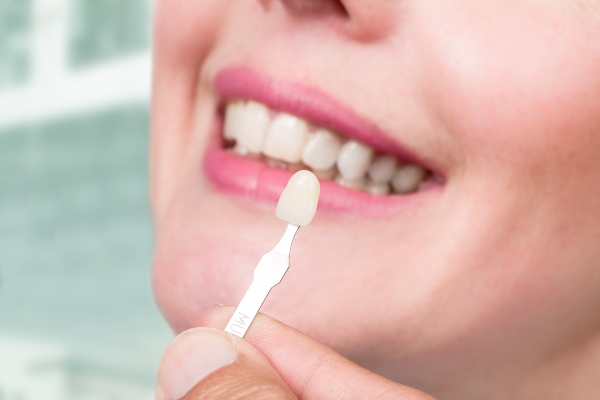
A very popular way to have one's teeth whitened in cosmetic dentistry is via an in-office treatment. Dental offices have access to much stronger products than those that are available in a store. These products can effectively lift stains off of the teeth in a matter of just one appointment. Results are almost instantaneous due to the strength of the whitening solution.

During an in-office teeth whitening treatment, individuals should expect the appointment to take about an hour to an hour and a half. The teeth will be thoroughly cleaned by a hygienist and dried so that the whitening solution works effectively. After this part of the process, the dentist will apply a solution directly to the teeth or a hand-held tray will be used for the teeth to soak in the solution. One should expect to keep the mouth in one position for a few minutes while the solution works its way all over the teeth. To finish, the dentist will use a curing light, which helps set the solution and remove the stains from the enamel.

After the treatment is complete, it is advised to avoid drinking or eating for an hour or so. It is also recommended to avoid dark-colored beverages that could reverse the effects of teeth whitening such as wine, coffee, and tea.

In-office teeth whitening can typically be done every few months, so long as there are no negative reactions to the treatment. Some individuals experience extreme sensitivity, which can be damaging to the teeth long-term.

Take-home trays

An alternative option for teeth whitening in cosmetic dentistry is to obtain take-home trays from the dentist. A lot of dental practices offer this as an option because it is usually a lower cost and allows the patient to control when they whiten their teeth. Of course, the solution is not as effective as when done in an office setting, however, it is still more effective than store-bought products.

Take-home whitening kits are a simple process. The kit comes with trays and multiple rounds of whitening solutions, which are to be used over the course of a couple of weeks. To start, it is advised to thoroughly clean the teeth and rid the mouth of anything that may be left behind, such as food particles. Next, the solution should be poured into the tray and the tray is then placed into the mouth. For a few minutes, the patient cannot move their mouth so that the solution can do its job. To finish, the tray should be removed and emptied.

Similar to in-office treatments, after whitening has been done, it is advised to avoid eating or drinking for an hour or so. And, as always, heavily dyed beverages should be avoided for a period of time.

Dental veneers

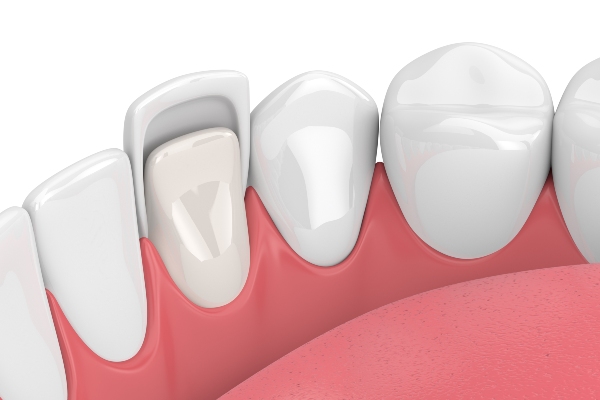
Dental veneers are used quite a bit in cosmetic dentistry. They are a versatile treatment option that can be used to address imperfections and abnormalities, as well as to restore teeth that are in bad shape. One purpose that they serve is to cover severe staining that cannot be lifted via teeth whitening treatments. The dentist can color-match the veneers to the other teeth so that one's smile looks consistent and even.

The dental veneer process takes longer as there are multiple appointments involved. First, the veneers are custom-crafted by a lab. Then, they are placed by the dentist in an appointment where the natural tooth is etched so that the veneer sticks.

Ready to get started?

When wanting further information about cosmetic dentistry treatments such as teeth whitening, it is a good idea to consult directly with a general dentist. An evaluation can be done to determine the most suitable form of treatment, and from there, a plan of action can be put into place. Additionally, the dentist can answer any questions or concerns about what is entailed. To learn more or to get scheduled for an appointment, reach out today.

Request an appointment here: https://www.integrityfamilydentist.com/blog/ or call Integrity Family Dental at (303) 337-3000 for an appointment in our Denver office.

Check out what others are saying about our dental services on Yelp: Cosmetic Dentist in Denver, CO.

A Guide to the Implant Supported Dentures Procedure

December 1, 2024

Implant Supported Dentures Denver, CO

If someone is missing teeth, it is imperative to replace them as soon as possible. Implant-supported dentures are one option for replacement. These fixed dentures allow for an effective and natural bite, which means that the wearer can eat normally. Unlike traditional dentures, implant-supported ones are attached to the jawbone, which prevents bone loss and provides a stable foundation.

Pre-procedure consultation

If someone is considering implant-supported dentures, a consultation with the dentist will ensure it is the right procedure. Not everyone is a good candidate for this replacement method. The patient must have sufficient jawbone density to hold the implants. The patient must also have good oral hygiene and be free of any medical conditions that could interfere with the healing process.

Implant-supported dentures procedure steps

The process of getting implant-supported dentures is not a quick one. There are numerous visits, and the average time for completion is between four to seven months, depending on the healing time after each step.

Placement of titanium rods

The initial step is to insert the implants, which are titanium screws, directly into the jawbone. To do this, the dentist makes a small incision in the gums and screws in each implant. For the upper jaw, the average number of implants used is seven, and for the lower jaw, usually four or five implants are placed.

The implants serve as the roots of the teeth. Time is needed for the jawbone to grow around the implants and for the gums to heal. This takes between three and six months.

Attachment of hardware

Once the area has healed, the patient comes back for a second visit. During this step, the dentist uncovers the implants and attaches abutments, which are metal extensions. These areas then need to heal, which takes about two weeks.

Fabrication of dentures

When the gums have completely healed, the dentist takes an impression of the gums and teeth. Based on this, a lab will fabricate a wax model. This allows the dentist to check the appearance and fit of the dentures and make any design modifications before the final product is made.

If the dentist and patient are happy with how the model looks and feels, the lab will make durable dentures that look like natural teeth. This fabrication process may take between one and three weeks.

Attachment of dentures

The final step is to secure the newly-made dentures onto the implants. The dentures are attached to the abutments, which will keep them in place. The dentist will make any final adjustments, and then the patient can begin to enjoy the new set of teeth.

Follow-up and long-term care

Your dentist may recommend one or two additional appointments to evaluate the healing of the tissues of the mouth and to ensure that the implants have fused properly. Total healing time will vary from person to person because it is influenced by a variety of factors, including:

  • A patient's dental and overall health
  • The state of the jaw bone pre-surgery
  • Medications or underlying health conditions that can slow healing, such as diabetes or poor circulation
  • Habits and lifestyle choices that can impact the body's ability to heal, such as smoking and excessive alcohol use
  • A patient's compliance with instructions during the recovery, including dietary recommendations and proper home care

In general, implant-supported dentures are easy to care for and do not require much additional work. If the dentures are removable, they should be cleaned and soaked according to the dentist's instructions to prevent staining and odors. These practices also prevent the appliances from becoming brittle.

If a patient has opted for permanently attached implant-supported dentures, it is important to clean thoroughly along the gumline where the dentures meet the tissues of the mouth. A water flosser is one of the more effective ways to do this, as it can thoroughly sweep away food particles that a toothbrush cannot reach. Dentures should also be brushed with a soft toothbrush and non-abrasive toothpaste, preferably one that is made for denture cleaning.

Finally, remember to see a dentist on a regular basis for professional cleanings and evaluations. If you notice any changes in your dentures over time, be sure to discuss them with your dentist promptly.

Conclusion

There are numerous procedures available to replace missing teeth. Implant-supported dentures are an option for certain candidates, and they provide a strong foundation that allows for normal speaking and chewing. The implants also prevent bone loss and maintain the appearance of the facial muscles.

Request an appointment here: https://www.integrityfamilydentist.com/blog/ or call Integrity Family Dental at (303) 337-3000 for an appointment in our Denver office.

Check out what others are saying about our dental services on Yelp: Implant Supported Dentures in Denver, CO.

Do Dental Veneers Feel and Work Like Real Teeth?

November 25, 2024

Do Dental Veneers Feel and Work Like Real Teeth? from Integrity Family Dental in Denver, CO

Dental veneers help patients achieve a picture-perfect smile. However, these wafer-thin shells go over the natural teeth, which begs the question: Are dental veneers comfortable? When installed correctly, veneers feel just like your real teeth. In this article, we will explore veneers, how they work, and how they manage to feel and look natural.

What are dental veneers?

Veneers help fix cosmetic imperfections on the teeth, such as discoloration, minor chips, and short teeth. For this reason, the dentist typically uses veneers...

(Read More)

What Are the Different Types of Dental Veneers?

November 17, 2024

What Are the Different Types of Dental Veneers? from Integrity Family Dental in Denver, CO

Dental veneers can improve your dental health. Your dentist can present many types of this dental restoration. Understanding the types of veneers available can broaden your options. Here are the different types of dental veneers that you must consider.

Porcelain veneers

These are the most common types of dental veneers. The material in these restorations is feldspar, which is a natural glass ceramic. That is why these veneers are also called feldspathic porcelain veneers. They are translucent and thin, allowing them to give...

(Read More)

An Estimated Timeline for a Smile Makeover Treatment

November 14, 2024

Smile Makeover Denver, CO

If you are considering undergoing a smile makeover, one of the biggest questions you may have is how long the process will take. The answer all depends on the type of treatment you undergo. For example, if you undergo a treatment that takes multiple visits or requires prerequisite procedures, your makeover will take longer. To figure out more specifically what kind of timeline you should expect, you should speak with your dentist, but provided here are some general processes available and the approximate times they take.

To understand why the timelines vary so greatly with each makeover, you need to know what exactly this term means. A smile makeover is any treatment that improves the appearance — and sometimes the function — of a smile. There are several procedures that are designed to do just that, each of which varies in terms of complexity. For this reason, the timelines for smile makeovers vary, and individuals should consult with a dentist if they want to establish realistic expectations.

Common smile makeover procedures and timelines

A smile makeover can take anywhere from one hour to complete to several months. For instance, dentists can complete in-office whitening treatments in less than an hour. However, if a patient wants to achieve a whole new smile with the help of implants, the process, from start to finish, may take anywhere from three months to a year. Though it is difficult to be specific when talking about a broad range of treatments, patients can get a much better idea of what to expect when they consider each individual procedure. Below are many common smile makeover procedures and the average time it takes to complete each.

Dental bonding

Dental bonding is a process designed to restore a chipped, cracked, or broken tooth through the use of tooth-colored resin. The bonding process is a three-step process that entails the application, sculpting, and eventual polishing of resin. Patients may elect to undergo bonding for a number of reasons, ranging from closing the gap between teeth to elongating teeth to hiding chips and cracks. A dentist can complete the bonding process in a single visit. Generally, this process takes 30 to 60 minutes for each tooth, so the more teeth that require bonding, the more time you can expect to spend in the chair.

Teeth whitening

In-office teeth whitening is much more effective than other forms of whitening, as it utilizes more powerful whitening agents. Many professional treatments take less than two hours total, though some dentists take slightly more or less time to fully whiten your teeth. The majority of patients who undergo in-office whitening can walk out of a single appointment with a dazzling, whiter, brighter smile. 

Porcelain veneers

Porcelain veneers are thin, custom-made shells that dentists place over the fronts of the teeth to improve the aesthetics of patients’ smiles. Veneers are common smile makeover procedures as they offer an affordable way to drastically improve the look and function of the teeth in little time. On average, the veneer process takes two to three visits to complete.

Lumineers

Lumineers are very similar in nature to veneers in that they consist of a thin shell that the dentist places over the tooth. However, unlike veneers, Lumineers do not require a dentist to shave down the natural tooth. The process to place Lumineers, from start to finish, requires two to three visits.

Tooth-colored crowns

A dentist may recommend a tooth-colored crown if a patient’s tooth is severely decayed. The crown can stop the decay from spreading and improve the appearance of the affected tooth. Placing a porcelain crown usually requires two visits. During the first visit, your dentist will usually prepare the tooth for the crown, make an impression of your damaged tooth, and place a temporary crown. Before your second visit, a custom crown will be fabricated using the impression taken at the initial visit as a mold. Then, at your second visit, your dentist will remove the temporary crown and fit you with your personalized permanent one.

Conclusion

There are several types of smile makeover procedures, each with varying levels of intensity. Some treatments require multiple trips to the dentist while others can happen in a single appointment. The amount of time each individual visit takes varies as well depending on how many teeth and how much work needs to be done. In general, expect more complicated procedures to take longer and recognize that applying multiple different treatments will likely require more time as well. If the timeframe of a procedure is a deciding factor for you, talk to a local dentist about your various options and what to expect from each.

Request an appointment here: https://www.integrityfamilydentist.com/blog/ or call Integrity Family Dental at (303) 337-3000 for an appointment in our Denver office.

Check out what others are saying about our dental services on Yelp: Smile Makeover in Denver, CO.

When Your Dentist May Recommend Dental Veneers

November 10, 2024

When Your Dentist May Recommend Dental Veneers from Integrity Family Dental in Denver, CO

An assessment for dental veneers can tell your dentist if you need these restorations. Veneers are customizable and thin. Each shell can correct mild to moderate dental issues. Here are the details to know when your dentist may suggest dental veneers.

Chipped, cracked, or broken tooth

Even if other dental restorations can repair these mild types of damage, dental veneers are the most common solution. Any dental accident can happen after a hard blow to the face or a bad fall. The dentist will...

(Read More)

5 Reasons Regular Dental Checkups Are Essential

November 7, 2024

Dental Checkup Denver, CO

A regular dental checkup is one of the most important aspects of a good oral healthcare routine. However, many people skip these appointments or go less frequently than they should. If you are in this situation, whether due to time constraints, financial concerns, a fear of the dentist, or any other reason, you should consider how avoiding regular dental checkups could be impacting your long-term oral health.

Dentists do not encourage regular visits because they want patients to be inconvenienced. They are so adamant about visiting on schedule because they know that professional dental checkups perform essential tasks that at-home care cannot. 

Why invest in regular dental checkups?

Dental checkups do take time out of your day, but they are worth the investment. The primary reasons that patients should be sure to attend their checkups on schedule are as follows.

To stop problems early

Dental checkups are opportunities for dentists to identify issues before they worsen. For instance, if a dentist spots the first stage of gingivitis (gum disease), they can advise the patient on what to change. This might mean choosing a different toothbrush, using antibacterial mouthwash, or improving their flossing technique.

By noticing this early formation of gingivitis and providing treatment, the dentist is sparing the patient from worsening inflammation, which can lead to periodontitis. Unlike gum disease, periodontitis cannot be reversed, so skipping out on the dentist appointment could mean life-long consequences.

To maintain a healthy smile

The aesthetic of a person’s smile is affected by many factors, such as the alignment of their teeth and whether their gums are positioned. However, most people would agree that one of the first things that someone notices about another person’s smile is how their teeth look. Visiting the dentist regularly is one of the best ways to keep the smile healthy.

Dentists remove calcified buildup, which can change the appearance of teeth. They also help keep the teeth clean and smooth so bacteria have more difficulty establishing colonies. By removing bacterial accumulation, the teeth remain healthier, and the enamel stays thicker, hiding the yellow-colored dentin inside the teeth. It is often this dentin being visible through eroded enamel that contributes to a discolored smile.

To remove buildup

Even the best tooth brushers will experience buildup on their teeth in the form of plaque and tartar. Once these deposits harden, they can no longer be removed at home with a regular toothbrush or floss.

Instead, the dentist will need to use specialized tools like scalers to chip away at the buildup. This keeps the gums healthy and provides a service that at-home care cannot. Thus, visiting the dentist regularly to remove tartar should be a part of patients’ oral care routines.

To check for cancer

Most people think of a dentist visit as the time that they spend in the chair having their teeth scraped, flossed, and polished. However, another essential part of a regular dental checkup is the oral exam.

The dentist will palpate (feel) the cheeks, tongue, and other mouth structures and visualize them under a bright light. This enables them to identify problematic areas, such as redness or lumps, that could indicate cancer. The faster oral cancer is detected, the better the prognosis.

To establish a history

Regular dental checkups should be just that — regular. Seeing the dentist consistently does wonders for a person’s oral health, but it also serves an equally important function: establishing a history. The more frequently that a patient gets X-rays and reports on their oral health situation, the more accurately a dentist can spot small changes over time.

This way, they can track areas of decay or notice a problem with tooth roots before the issue results in pain or damage. When a dentist only sees a patient infrequently, they do not have the history that they need to make future predictions.

Get your regular dental checkup 

Regular dental checkups are a valuable way to keep your smile in good condition for as long as possible. However, there is no need to feel ashamed if it has been a while since your last appointment! Our dentist would never judge you; instead, they would be happy to see you for a checkup. Reach out to schedule an appointment, as the best time to invest in your oral health is now.

Request an appointment here: https://www.integrityfamilydentist.com/blog/ or call Integrity Family Dental at (303) 337-3000 for an appointment in our Denver office.

Check out what others are saying about our dental services on Yelp: Dental Checkup in Denver, CO.

3 Questions to Ask Your Dentist Before Getting Dental Veneers

November 1, 2024

3 Questions to Ask Your Dentist Before Getting Dental Veneers from Integrity Family Dental in Denver, CO

Seeing your dentist for dental veneers will start with a consultation. This is the right opportunity to find out more about this treatment. Understanding the process means asking the right questions. Here are three questions to ask your dentist before you get your dental veneers.

What are the ideal foods to eat with dental veneers?

If the patient chooses temporary veneers, these restorations are not attached with a strong adhesive. There are times when they may be displaced or even damaged....

(Read More)

FAQs About Porcelain Crowns Used in Cosmetic Dentistry

November 1, 2024

Cosmetic Dentist Denver, CO

If you have significant tooth decay or you are missing part of a tooth, porcelain crowns may be a good option to discuss with your dentist. These crowns are a cosmetic dentistry procedure used to restore the shape, function, and color of teeth, and they can serve practical purposes as well as aesthetic ones. This guide will answer some of the most common questions about the procedure.

Porcelain crowns FAQs

If you are considering porcelain crowns or you are comparing them to other dental procedures, you likely have several concerns and questions about their material, placement, and durability. These are some of the most frequently asked questions about porcelain crowns.

1. What is a porcelain crown?

Porcelain crowns are hollow false teeth that are custom-made to fit over an existing tooth after that tooth has been shaped and trimmed. Once in place, the crown covers the tooth like a cap. You will not be able to remove it yourself after it is placed.

2. What are porcelain crowns used for?

Porcelain crowns may be used in cosmetic dentistry to cover a tooth that is misshapen or discolored. They are placed over teeth that are weak or ones that have incurred a significant amount of decay. When crowns are used cosmetically, such as on teeth that are visible to others, they help teeth look normal again in terms of color and construction.

3. What is the recovery time for the procedure?

The procedure is non-surgical and does not result in serious pain or discomfort. The appointment should only last for about an hour to an hour and a half, but it could be lengthier depending on how many crowns you are getting. Most patients can return to their normal daily routine immediately after getting their crowns.

4. How long do porcelain crowns last?

The average lifespan of porcelain crowns is about 15 years. Some may last longer than 20 years. The material used in porcelain crowns has a similar strength and hardness as natural tooth enamel. If you have an older porcelain crown or you wish to have one replaced, your dentist will be able to advise you on your next steps.

5. Do porcelain crowns require special care?

Porcelain crowns require the same type of maintenance as natural teeth. Brushing twice per day and flossing once per day is recommended. Additionally, patients should see a dentist once every six months.

The temporary crown you receive while you wait for your permanent crown is not as durable as a permanent crown. Your dentist may recommend that you avoid sticky, hard, or chewy foods, shift your chewing to the other side of your mouth, and be careful when flossing while you have your temporary crown.

6. How long does it take to get porcelain crowns?

The procedure requires two visits. During the first visit, the dentist prepares the tooth, makes an impression, matches the color of the crown to the natural teeth, and places a temporary crown. The permanent crown is placed about two weeks later. Your crown placement appointment can be scheduled on any day that works for you as there is no downtime after you receive it.

7. What kinds of crowns are there?

In addition to porcelain, dental crowns can be made from metal, porcelain-fused-to-metal, resin, or ceramic. Metal crowns last a long time, but many patients do not prefer the aesthetics of the metal color. These crowns are sometimes used for molars that are not visible when a person smiles.

Porcelain-fused-to-metal looks the most like natural teeth; however, the metal under the porcelain can sometimes show through as a dark line. Resin crowns are less expensive than the other types but are more prone to breaking and may wear down faster.

Crowns made entirely from ceramic or porcelain are often used in cosmetic dentistry because they provide an accurate color match with natural teeth. However, these crowns may not be as strong as porcelain-fused-to-metal.

Conclusion

Because they completely cover the natural tooth and look similar to natural teeth, porcelain crowns are a popular cosmetic dentistry treatment for improving the appearance of stained, misshapen, or filled teeth. Once in place, they closely resemble natural teeth and you should be able to eat and speak normally with them for many years.

Whether you are interested in fixing one weak tooth or factoring in the use of crowns for your whole-mouth reconstruction, porcelain crowns can serve several purposes and last for decades. Your dentist will be able to determine which procedure is correct for your teeth.

Request an appointment here: https://www.integrityfamilydentist.com/blog/ or call Integrity Family Dental at (303) 337-3000 for an appointment in our Denver office.

Check out what others are saying about our dental services on Yelp: Cosmetic Dentist in Denver, CO.

Cosmetic Dental Services When You Have Gaps Between Teeth

October 30, 2024

Cosmetic Dental Services When You Have Gaps Between Teeth from Integrity Family Dental in Denver, CO

Cosmetic dental services, like composite bonding or the placement of restorations, can help fix unnatural gaps between your teeth. Medically termed diastemas, these gaps can impact how your smile looks and the way that you feel about your appearance.

A gap between teeth is one of the things that most people notice when you open your mouth. These gaps are more likely to develop in the front of the mouth, but they can also occur at the back.

Fixing spaces between teeth with cosmetic...

(Read More)